Firearm Storage: UK Certificate Responsibilities
- Prevent unauthorised access and follow the actual certificate conditions
- Understand the governing principle
- Ask the licensing department before committing to an arrangement
- Protect keys, codes, and access methods
- Keep life-safety routes usable
- Review storage when circumstances change
- Treat travel and temporary absence as separate planning questions
- Keep an administrative review checklist
Prevent unauthorised access and follow the actual certificate conditions
Current Home Office security guidance states that firearm-certificate conditions require relevant firearms and shotguns to be stored securely, so far as reasonably practicable, against access by unauthorised people. The correct arrangement depends on the individual premises and risk assessment. Read the certificate, the current Firearms security handbook, and instructions from the police firearms licensing department before installing or changing storage.
This is legal-process education, not property-specific security design or technical firearm advice. A licensing officer, competent security professional, or qualified solicitor should address an individual arrangement.
Understand the governing principle
The handbook explains that an unauthorised person is someone who does not hold a certificate permitting possession of the holder’s guns. Its guidance is not itself presented as a complete statement of law; certificate holders remain responsible for complying with the conditions attached to possession.
That distinction matters. A cabinet sold with a security label does not automatically make every installation compliant. Location, fixing, building construction, household access, number and type of items, and local risk can affect police advice.
Explore storage responsibilities for guidance about maintaining records and contacting the licensing authority.
Ask the licensing department before committing to an arrangement
Discuss proposed storage with the relevant force, especially for a first application, move, building change, unusual premises, shared occupancy, or any uncertainty about access. Provide accurate information about the property and people who may enter it.
Do not publish photographs, locations, key routines, or other details that could weaken security. Keep correspondence and any approved plan with the certificate records, protected from unnecessary access.
The certificate application overview explains why the home assessment and submitted information must be handled honestly.
Protect keys, codes, and access methods
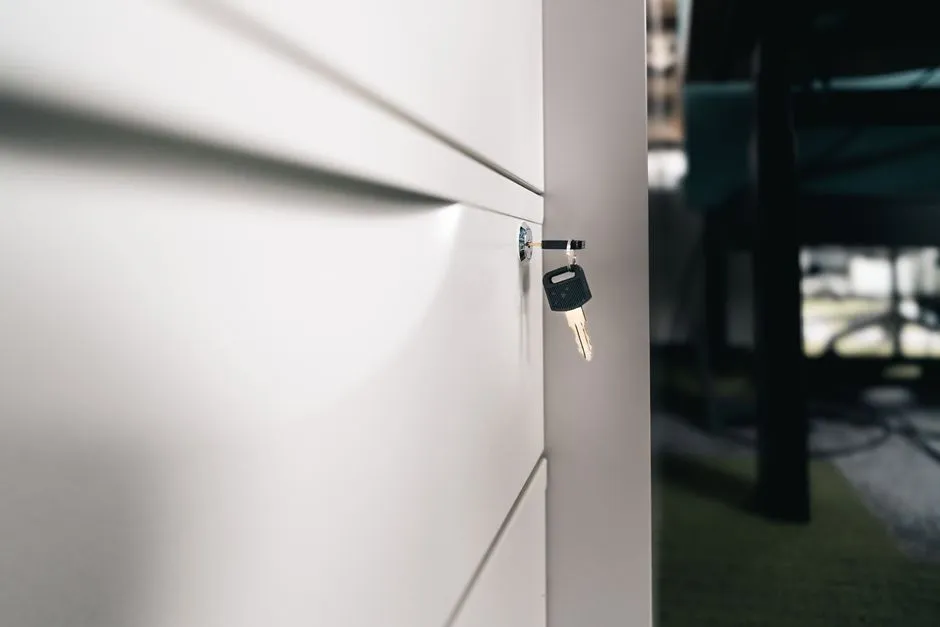
The storage system is only as controlled as its access method. Keep keys, codes, and recovery information from unauthorised people, including household members who do not hold the required authority. Do not hide a key nearby and describe the arrangement as secure because the hiding place has a decorative plant.
Ask the police firearms licensing department how household composition, carers, contractors, guests, children, or shared spaces affect the proposed plan. Generic web advice cannot determine whether a particular person is authorised or what changes are required.
Keep life-safety routes usable
The Home Office handbook explicitly says security requirements must not prevent the immediate and unobstructed use of a window or other opening provided as an emergency escape. It also says advice must consider occupant safety and relevant fire and building rules.
Do not obstruct an exit, compromise fire precautions, overload a structure, or alter a rented building without required permission. If security and life-safety requirements appear to conflict, seek advice from the licensing department and the agency or professional responsible for the building rule.
Review storage when circumstances change
Contact the licensing department before or promptly after a change when required by the certificate or force procedure. Relevant changes can include moving home, renovation, altered access, new household members, loss of a key, damage to storage, or a security incident.
Do not wait for renewal to report an immediate weakness. If keys, codes, firearms, or certificate documents are lost or stolen, follow current police reporting instructions without delay. In an immediate danger, call the police or emergency services.
Treat travel and temporary absence as separate planning questions
Storage away from the usual premises and transport can involve different risks and legal requirements. Do not improvise from a home-storage article. Consult the current security handbook, certificate conditions, destination arrangements, carriers where relevant, and the police firearms licensing department before travel.
This publication does not provide concealment, disassembly, or vehicle-security tactics. The certificate holder must obtain advice suited to the actual journey and current law.
Keep an administrative review checklist
Use a non-sensitive record that confirms:
- the current certificate and conditions have been read;
- the licensing department has accurate address and contact information;
- the approved arrangement has not been altered;
- keys or codes remain controlled;
- emergency exits and fire precautions remain unobstructed;
- building work or household changes have been assessed;
- any damage, loss, theft, or access concern has been reported as required.
Do not record secret access details in an exposed checklist. The purpose is to prompt review, not create instructions for defeating the system.
Secure storage is an ongoing legal and safety responsibility. Use current official guidance, disclose the real circumstances to the licensing department, preserve occupant safety, and ask before changing the arrangement. A confident guess is not approval.